
Leading Design of Customer Reporting tool to Improve Strategic Decision-Making

My Role: Sr. Product Design Lead
Design Team: 2 Sr. Product Designers
Key Outcomes
Led the design team for a new Customer Reporting product that delivered measurable improvements in both usability and business impact:
- Simplified reporting workflows that empowered users to create, access, and interpret reports with greater speed and confidence.
- Enhanced client service quality by providing Strategic Account Executives with clearer insights and faster turnaround times.
- Reduced operational time and costs through streamlined processes and improved efficiency, cutting user task completion time by 75% (2 hours to under 30 minutes).
- Enabled teams to focus on relationship‑building, shifting effort from manual reporting tasks to strengthening customer partnerships.
My Team Leadership Impact
- Strengthened team alignment and velocity by facilitating daily design syncs, ensuring blockers were surfaced early and sprint goals stayed on track.
- Facilitated cross‑functional discussions as part of key leadership group to evaluate how decisions would affect the user experience, ensuring decisions were grounded in empathy for end users.
- Elevated design quality and consistency through regular internal reviews, fostering a culture of feedback and continuous improvement.
- Strengthened team collaboration by fostering open dialogue and structured alignment sessions, ensuring decisions balanced usability and business goals.
- Built stakeholder trust and transparency by hosting weekly sync with business partners, aligning design outcomes with strategic objectives.
- Enabled adaptive problem-solving by organizing ad-hoc brainstorming and working sessions, helping the team respond quickly to evolving requirements.


“Jay has a great ability to connect understanding across multiple teams that is key to us moving forward and helps us quickly design and iterate a robust product.”
Nicole Hess, Sr. Product Designer
Context & Business Challenge
CVS Health’s Pharmacy Services is responsible for generating customer reports tied to billions of dollars in contracts. At the start of 2024, these reports were produced across dozens of disparate systems and multiple teams, creating a fragmented and inefficient process. This complexity introduced significant challenges:
- Limited accessibility: Reports were difficult to generate, interpret, and share.
- Operational inefficiency: Producing reports required extensive manual effort, slowing the ability to respond with timely, strategic decisions.
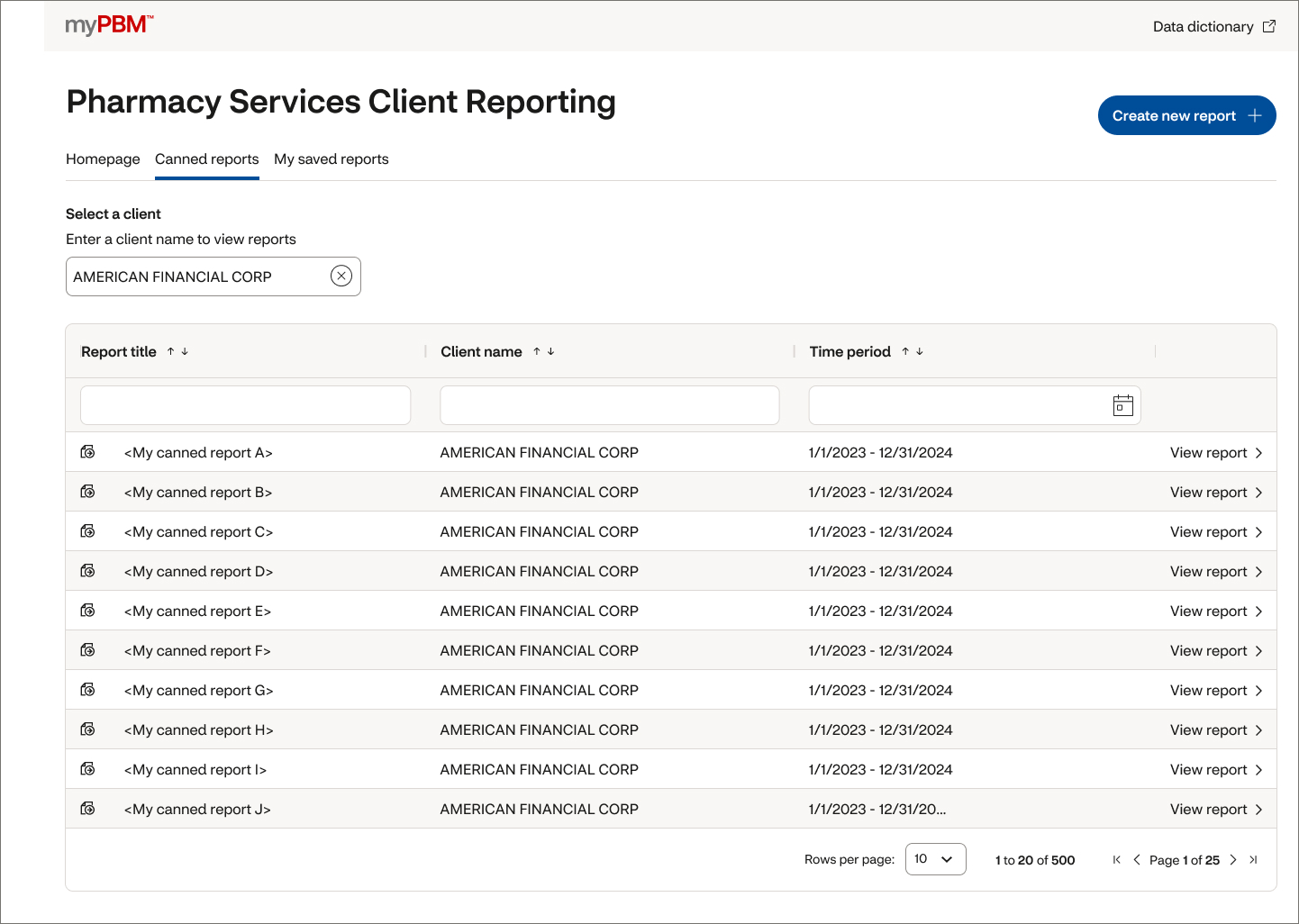
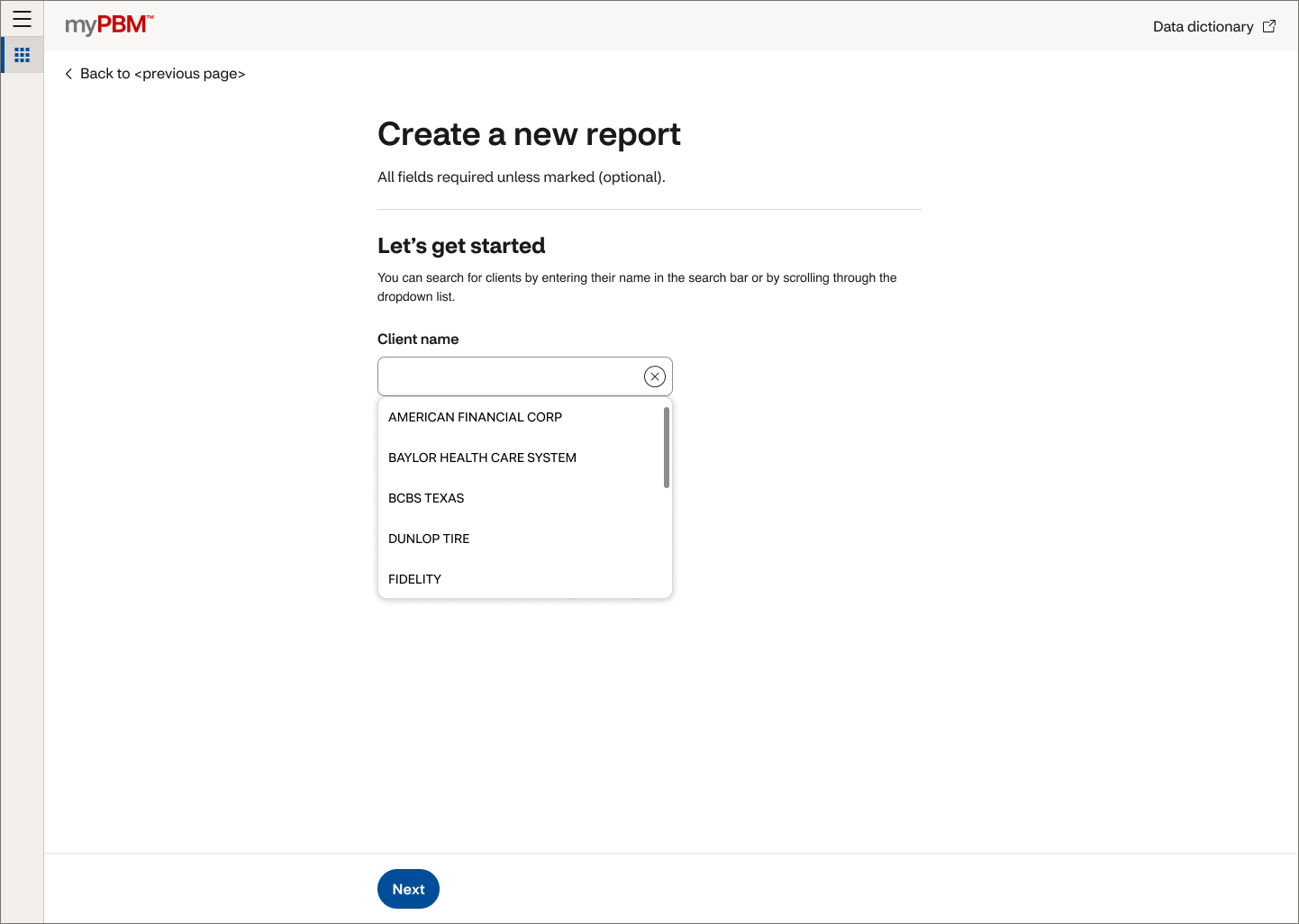
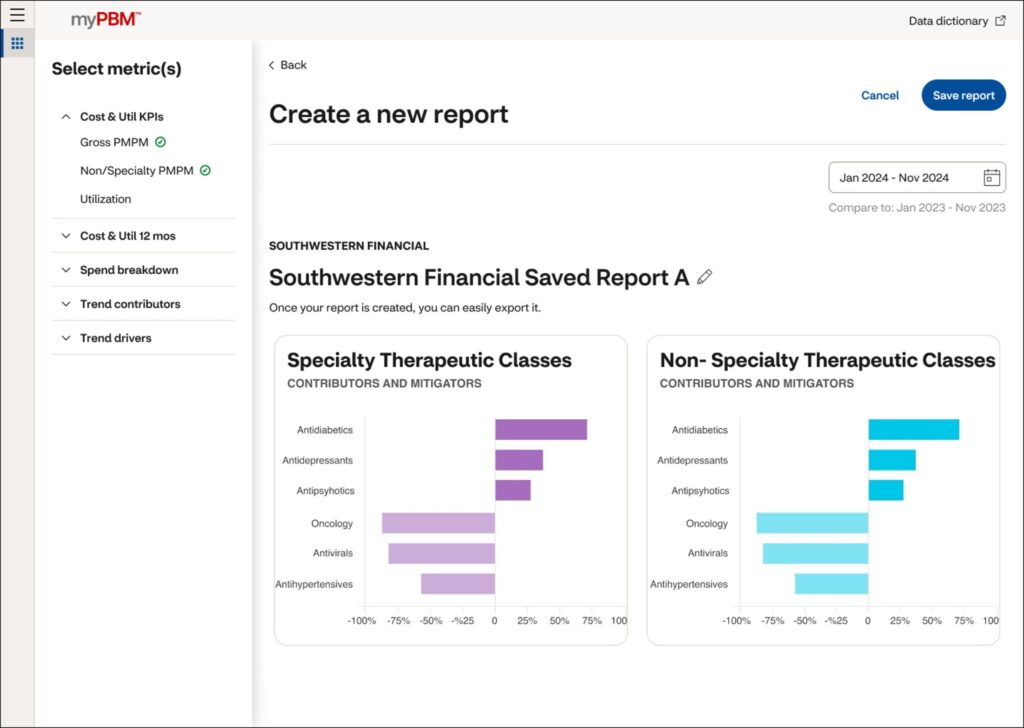
A new Customer Reporting product needed to be designed to simplify how users create, access, and understand reports, enabling faster, more confident decision-making to reduce time, costs, and enhance client services.
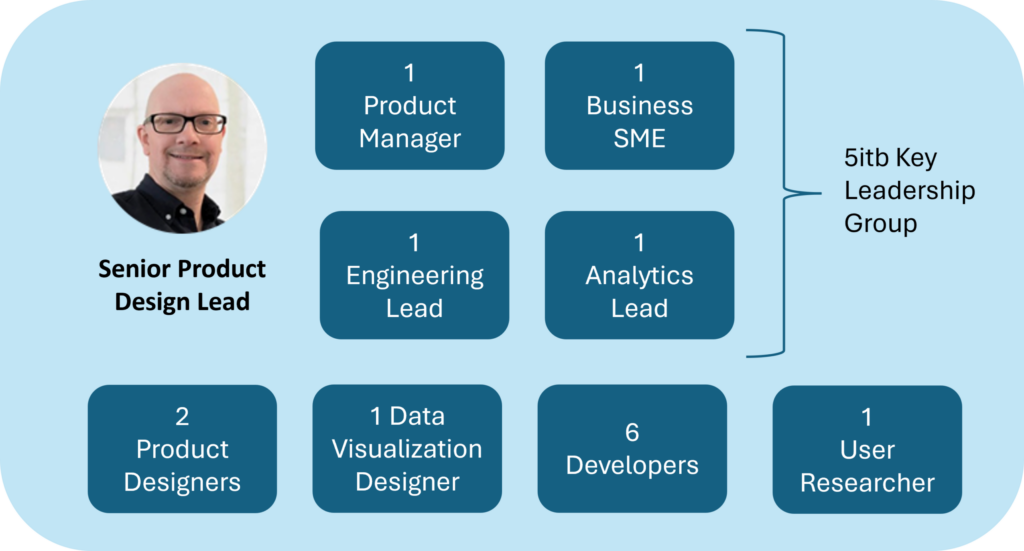
My Role & Team
Obsessing About the User Above All Else
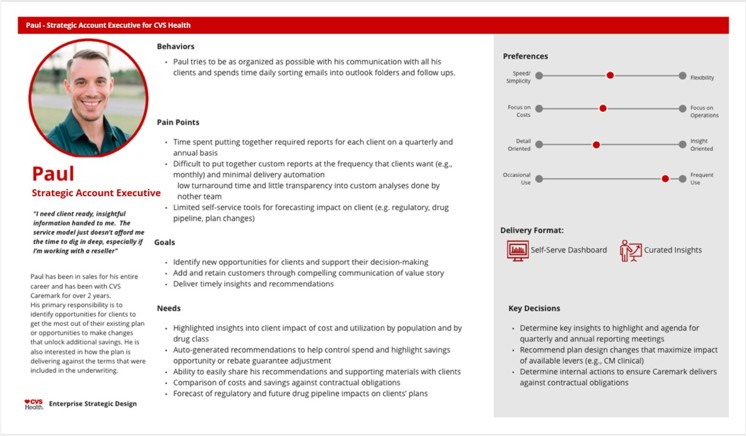
We began our process by gathering existing research and notes from a Customer Reporting workshop that had been held earlier in 2024. Included were user interviews and resulting personas.
Our User Persona: Paul, Strategic Account Executive (SAE)
“I need client ready, insightful information handed to me. The service model just doesn’t afford me the time to dig in deep, especially if I’m working with a reseller.”
Design Leadership: The UX of BI Tool Options
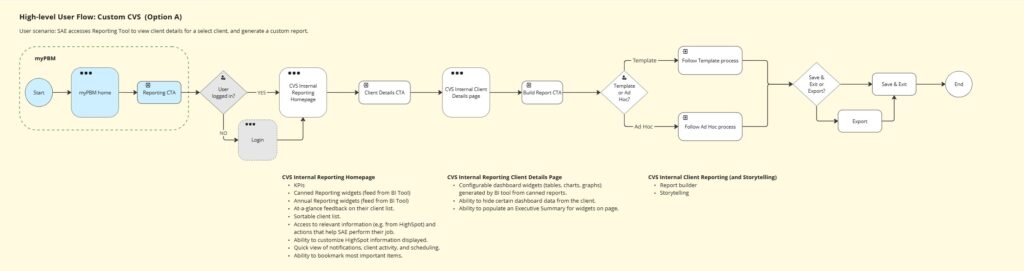
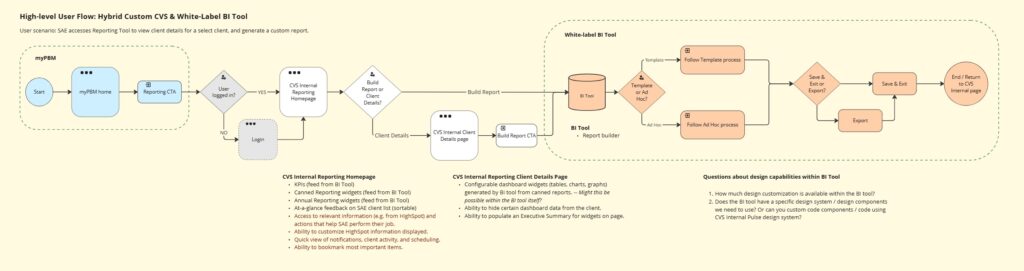
5itb team faced with two options for our product’s Business Intelligence (BI) tool integration:
- Custom CVS reporting tool for all pages with data visualizations embedded from BI Tool.
- Hybrid CVS reporting tool with custom CVS homepage and customer details page and a white-label BI Tool handling all reporting functions.
- Facilitated cross‑functional discussions with the 5itb team to evaluate how each BI tool option would affect the user experience, ensuring decisions were grounded in empathy for end users.
- Championed the product’s #1 principle, “Obsess about the user over all else”, by keeping user needs at the center of every trade‑off conversation.
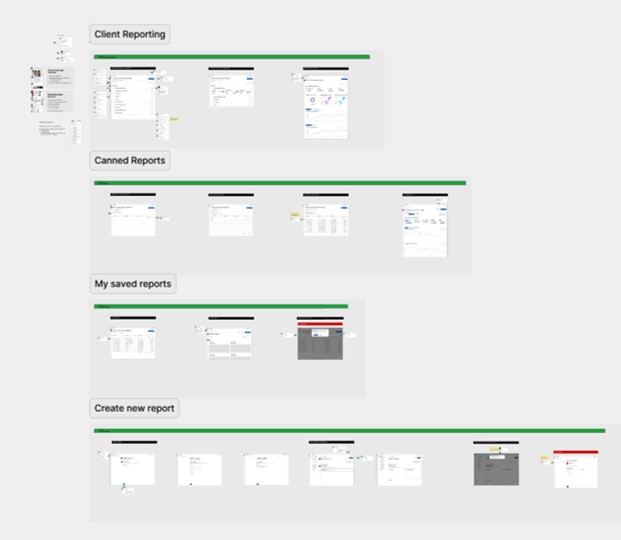
- Created detailed UX flows for BI tool scenarios, enabling stakeholders to visualize and debate the real impact of each option on usability and engagement.
- Guided the team through a critical decision point, weighing speed and cost against long‑term control and user experience quality.
- Aligned cross-functionnal team around the custom solution, securing consensus through evidence‑based UX storytelling.
- Set a precedent for user‑first decision making, demonstrating how design leadership can shape strategic product direction beyond designs themselves.
Leading Design Team from
Concept to Sprint Execution
- Transformed a set of basic product requirements into a clear, actionable roadmap by facilitating working sessions with the Product Manager to refine scope and priorities.
- Guided the creation and estimation of design stories, then strategically mapped them across sprints to ensure alignment, efficiency, and delivery momentum.
- Approach accelerated design readiness by a sprint and ensured the team delivered on-time with clarity and confidence.

Cultivating Cross‑Functional Leadership
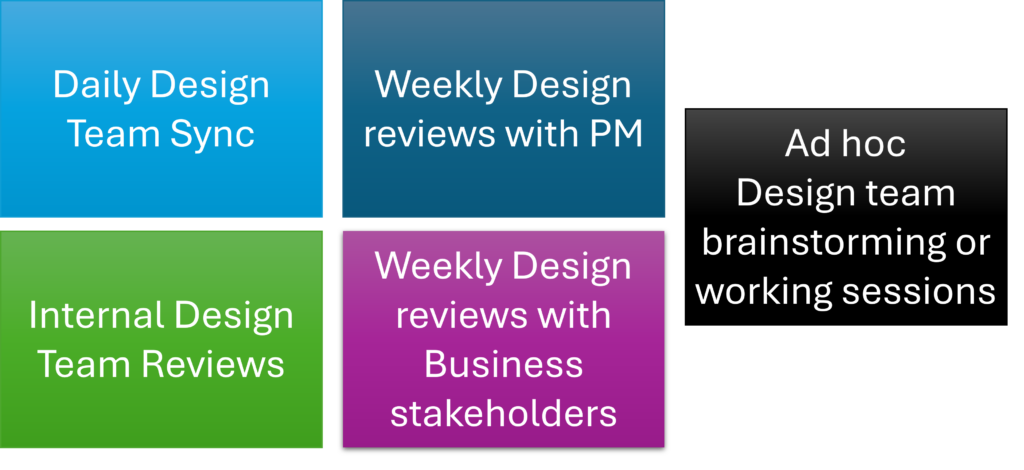
- Strengthened team alignment and velocity by facilitating daily design syncs, ensuring blockers were surfaced early and sprint goals stayed on track.
- Elevated design quality and consistency through regular internal reviews, fostering a culture of critique and continuous improvement.
- Enhanced cross-functional collaboration by leading weekly reviews with the Product Manager, translating design decisions into product priorities.
- Built stakeholder trust and transparency by hosting Friday morning sessions with business partners, aligning design outcomes with strategic objectives.
- Enabled adaptive problem-solving by organizing ad-hoc brainstorming and working sessions, helping the team respond quickly to evolving requirements.
- Empowered designers’ voices by creating safe spaces to raise questions and concerns, driving engagement and ownership in the design process.

Driving Collaborative Design Decisions
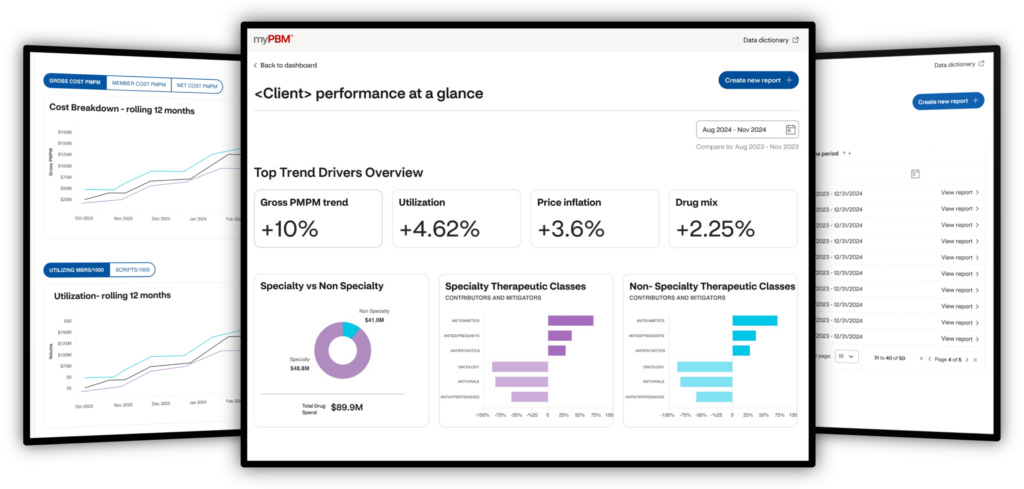
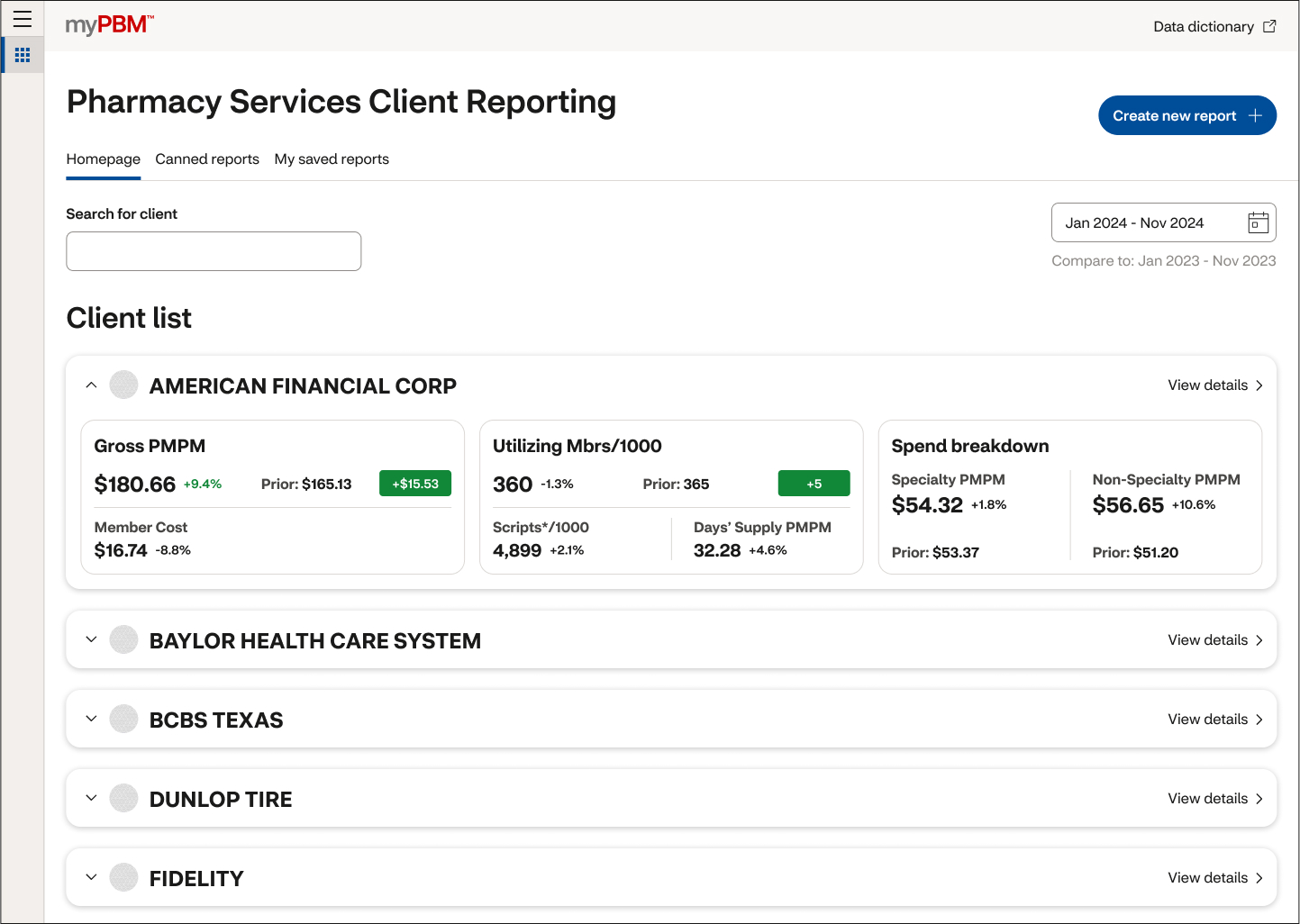
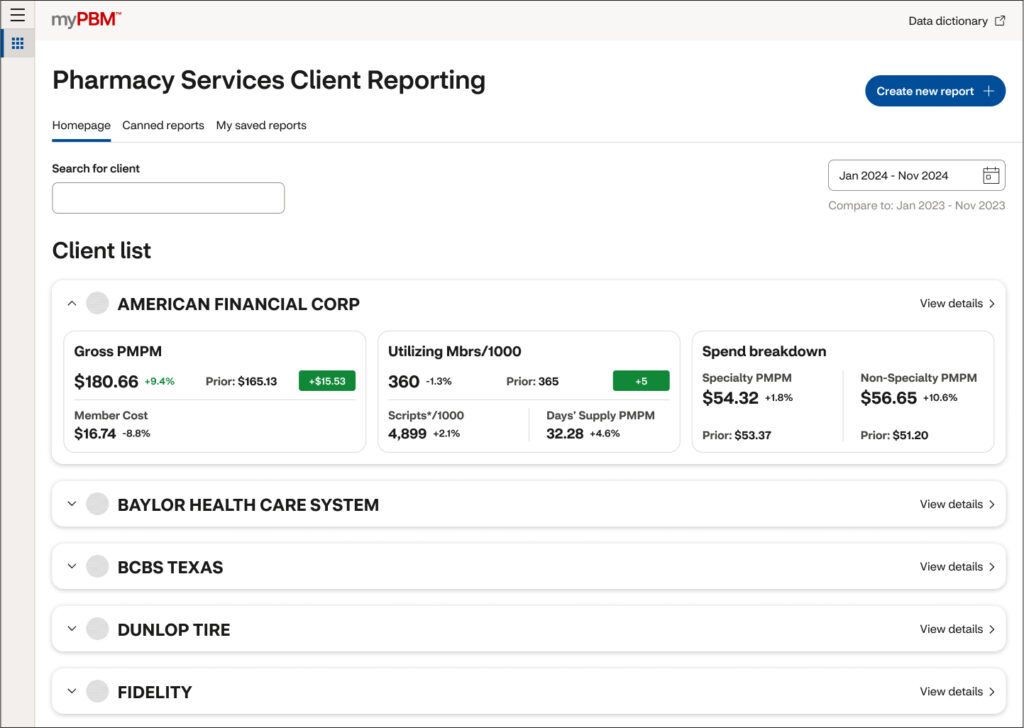
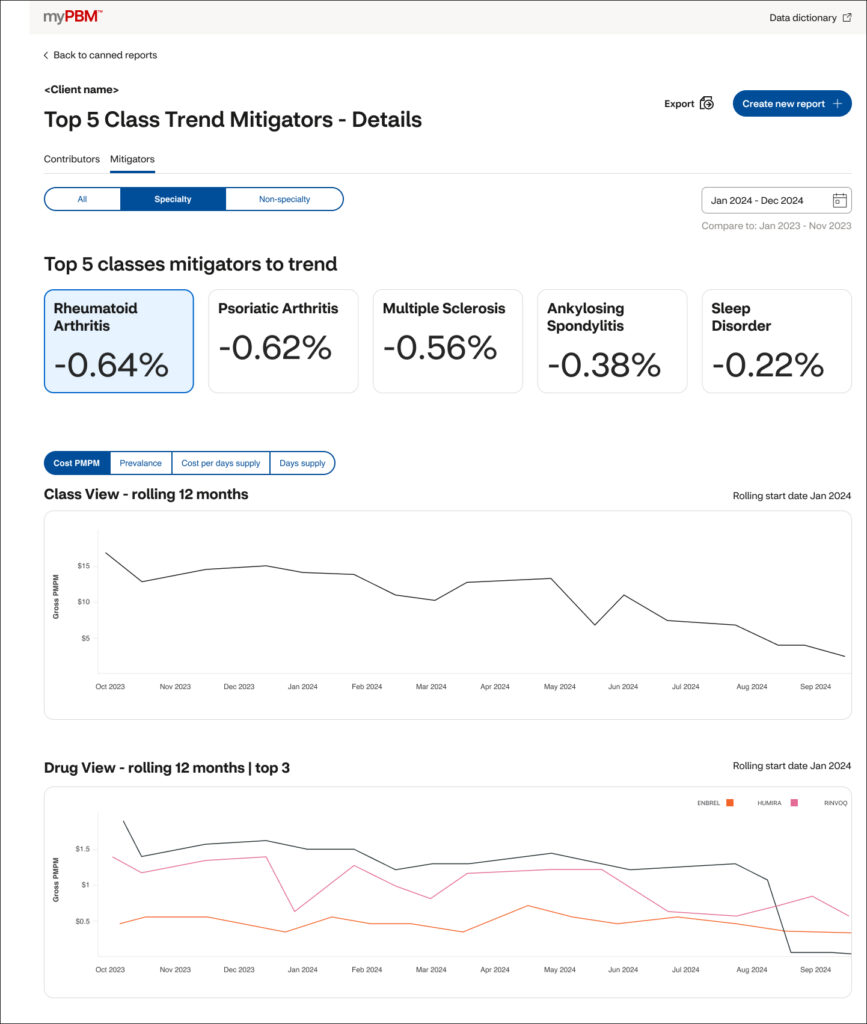
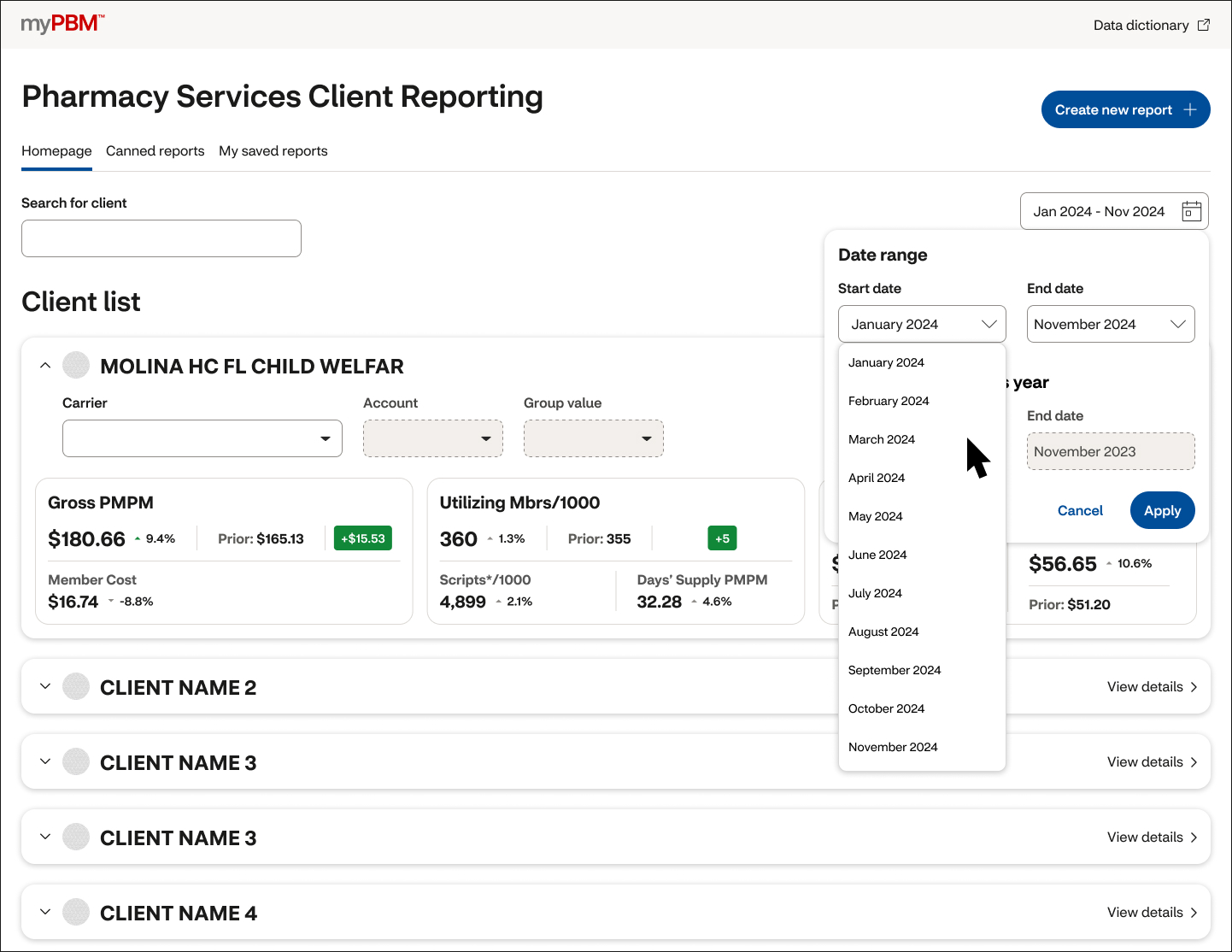
- Facilitated collaborative design workshops that aligned cross-functional stakeholders on an expandable list view, ensuring consensus around a scalable solution for displaying finalized KPI metrics.
- Guided iterative design evolution from basic numerical widgets to visually enriched indicators, enabling stakeholders to quickly interpret performance trends and act with confidence.
- Championed user-centered decision-making by incorporating SAE feedback into widget design, resulting in a system that allows rapid scanning of top metrics and streamlined access to deeper insights.
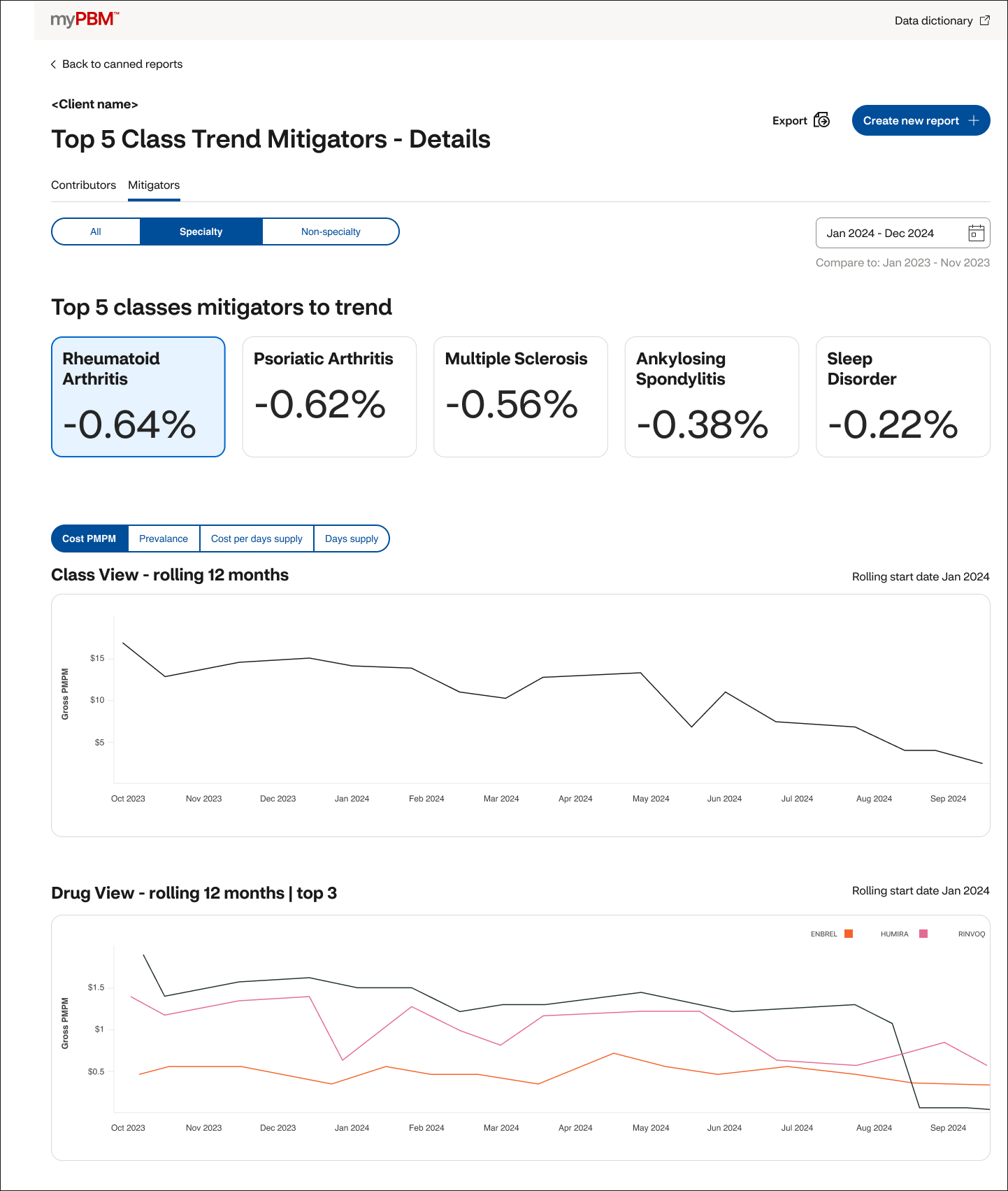
- Enabled data-driven decision-making through design enhancements that reduced cognitive load, empowering SAEs to identify priority metrics faster and make more informed business choices.
- Strengthened team collaboration by fostering open dialogue and structured critique sessions, ensuring design decisions balanced usability, clarity, and stakeholder needs.
- Delivered measurable impact by transforming abstract KPIs into intuitive visual cues, improving efficiency in metric review and accelerating decision cycles for SAEs.
Gaining User Feedback
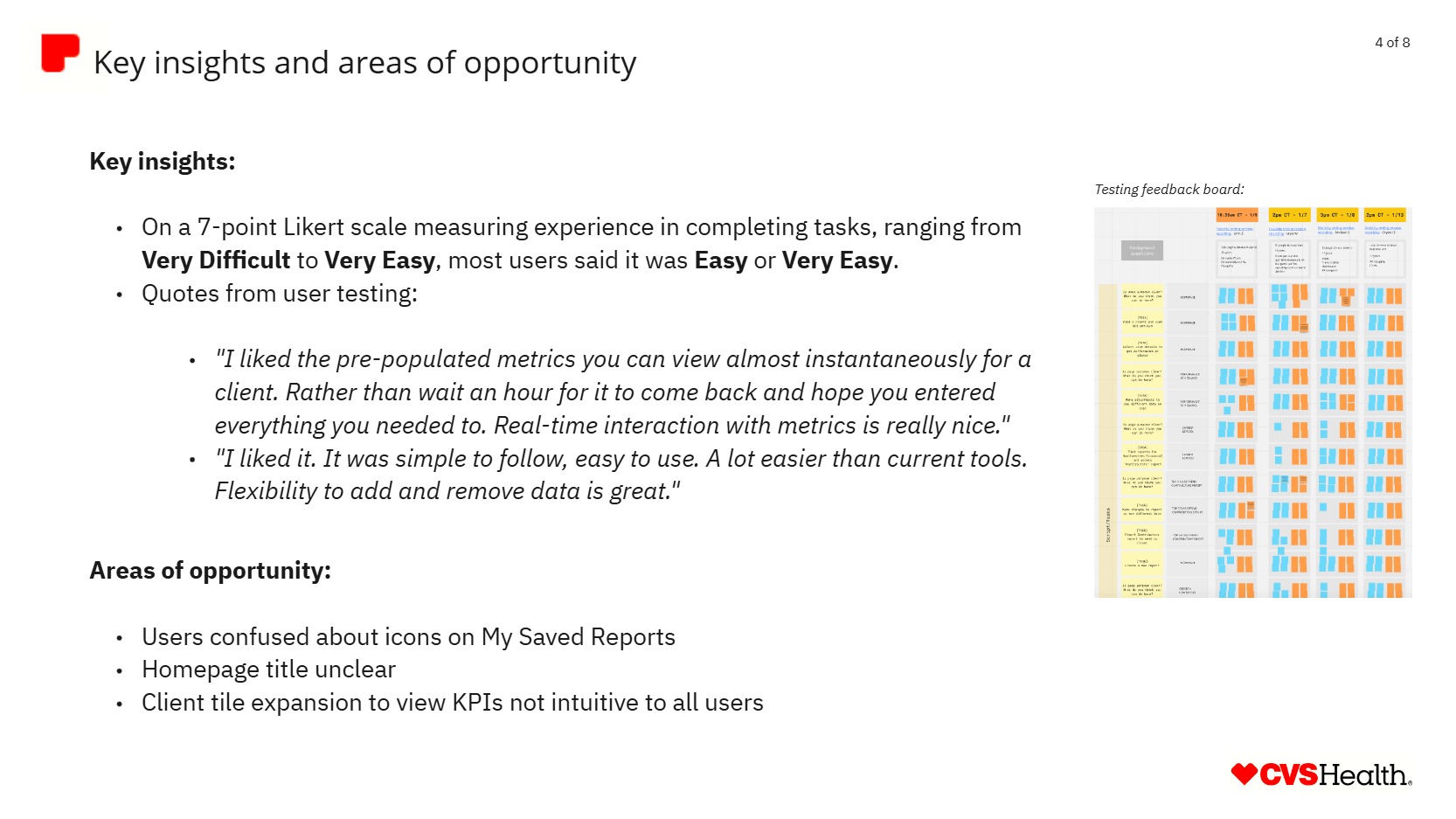
- Enabled designers to confidently plan and execute usability testing by providing clear frameworks, aligning test objectives with product goals, and ensuring readiness of prototypes and scripts.
- Empowered designers to lead moderated sessions, reinforcing their ability to engage directly with users.
- Facilitated collaborative debriefs that encouraged designers to synthesize findings, identify key themes, and co-author usability reports.
- Aligned with PM and stakeholders on design iterations based on usability feedback.
Ensuring Accessible Designs
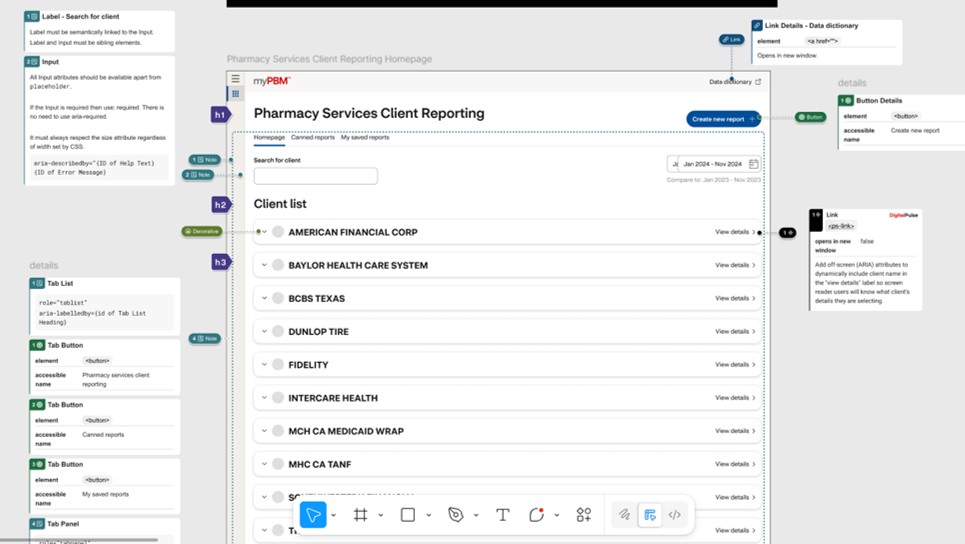
Reduced accessibility gaps, improved inclusivity, and strengthened organizational accountability by:
- Ensuring adherence to WCAG standards across all design deliverables.
- Working with designers in providing detailed annotations to support developers in implementing accessible solutions.
Deliviering a Customer Reporting tool to Improve Strategic Decision-Making
Key Outcomes
Led the design team for a new Customer Reporting product that delivered measurable improvements in both usability and business impact:
- Simplified reporting workflows that empowered users to create, access, and interpret reports with greater speed and confidence.
- Enhanced client service quality by providing Strategic Account Executives with clearer insights and faster turnaround times.
- Reduced operational time and costs through streamlined processes and improved efficiency.
- Enabled teams to focus on relationship‑building, shifting effort from manual reporting tasks to strengthening customer partnerships.
My Team Leadership Impact
- Strengthened team alignment and velocity by facilitating daily design syncs, ensuring blockers were surfaced early and sprint goals stayed on track.
- Facilitated cross‑functional discussions as part of key leadership group to evaluate how decisions would affect the user experience, ensuring decisions were grounded in empathy for end users.
- Elevated design quality and consistency through regular internal reviews, fostering a culture of feedback and continuous improvement.
- Strengthened team collaboration by fostering open dialogue and structured alignment sessions, ensuring decisions balanced usability and business goals.
- Built stakeholder trust and transparency by hosting weekly sync with business partners, aligning design outcomes with strategic objectives.
- Enabled adaptive problem-solving by organizing ad-hoc brainstorming and working sessions, helping the team respond quickly to evolving requirements.

“Jay has been a pleasure to work with and is a highly skilled and engaged UX designer and manager. He has consistently done an excellent job of keeping our team aligned on product requirements and ensuring we stay on track to meet deadlines.”
Kyle Lysobey, Senior Product Designer